How to Read a Sewer Camera Report
A report without distances is a photograph. A report with them is a document you can act on.
- Camera footage and written scope before any price
- City of Dallas permits handled when the main is touched
Ask about your line
Tell us what is backing up. We call back to confirm a window.
The five fields that matter
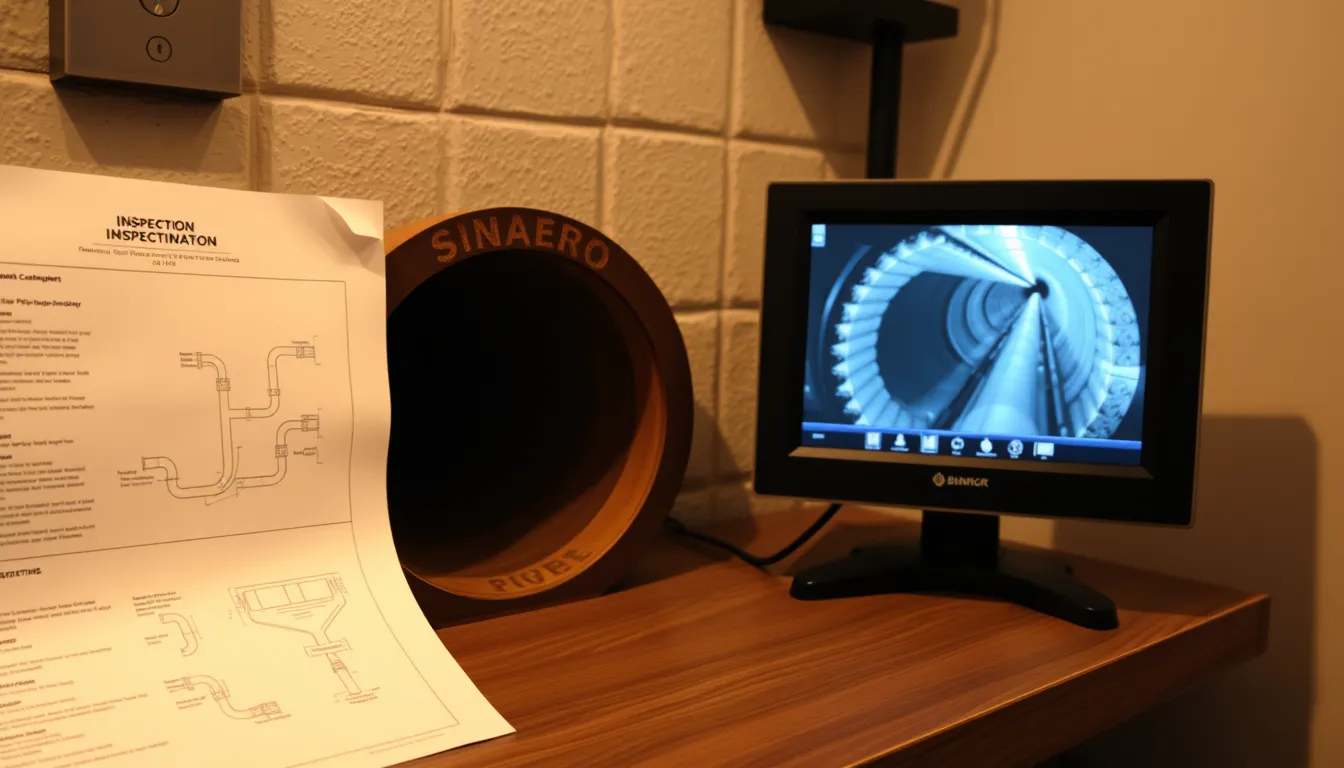
Material, diameter, distance from the cleanout, defect type and severity. Those five let any contractor quote the same scope without repeating the inspection. A report that lists only the defect type leaves the biggest variable, its location, unstated. Ask for the run length to the main as well. That number sets the linear-foot cost if replacement is needed, and it is trivial to record at the time.
Reading the defect descriptions
Offset means the pipe ends no longer align. Belly means a low point holding water. Root intrusion describes the mass, not the opening it entered through. Crack, break and hole are self-explanatory but differ in what repair they allow. Collapse is the term that matters most: it means the cross-section is gone and lining is ruled out. If the report says collapse, the decision is replacement or bursting.
What a good recording looks like
Continuous footage, a visible distance overlay, and a locate trace so the route can be marked above ground. The camera should pass the full run where physically possible, and the report should say where it stopped and why. A recording that jumps between short clips, without distance marks, cannot be used to price work and cannot be shown to a second contractor for comparison.
What to do with it afterwards
Keep the file. It is the record of condition at a date, which matters at resale, in an insurance claim, and if a repair is later disputed. If the report recommends a method, check that the recommendation matches the defect described. A recommendation to line a collapsed pipe is a red flag about the contractor, not about the pipe.
Questions on this topic
What should a sewer camera inspection report include?
Pipe material and diameter, distances from the cleanout to each defect, defect type and severity, the total run to the main, and a locate trace.
Do I need the video file or just the summary?
The file. A summary cannot be verified by a second contractor, and the recording is your evidence of condition at that date.
What does "belly" mean on a camera report?
A low point where the pipe has settled and water stands. It holds solids and cannot be fixed by lining, only by resetting the grade.
How long should the inspection footage be?
Long enough to cover the full run in one continuous pass. A typical Dallas lateral produces a few minutes of footage, not a few seconds.