Trenchless or Traditional: Which Fits Your Dallas Line
The method should follow the footage. Choosing first and inspecting later is how yards get ruined.
- Camera footage and written scope before any price
- City of Dallas permits handled when the main is touched
Ask about your line
Tell us what is backing up. We call back to confirm a window.
The honest decision tree
If the pipe is round, structurally sound and the defect is a joint gap or root intrusion, lining is a candidate. If the pipe is brittle, deformed or Orangeburg, bursting is the stronger option. If there is a belly that holds water, neither lining nor bursting fixes grade and replacement is the answer. That tree starts with a camera run. Any recommendation that skips it is a preference, not a diagnosis.
Where traditional trenching still wins
Open cut is the better method on shallow runs in open ground with no hardscape above, on short runs where mobilising trenchless equipment costs more than the dig, and where the line needs additional work such as adding a cleanout at the same time. It is also the fallback when a bursting pull is likely to stall: deep runs under mature trees, or where the old pipe has flattened into an oval that a head cannot pass.
What each method does to a Dallas yard
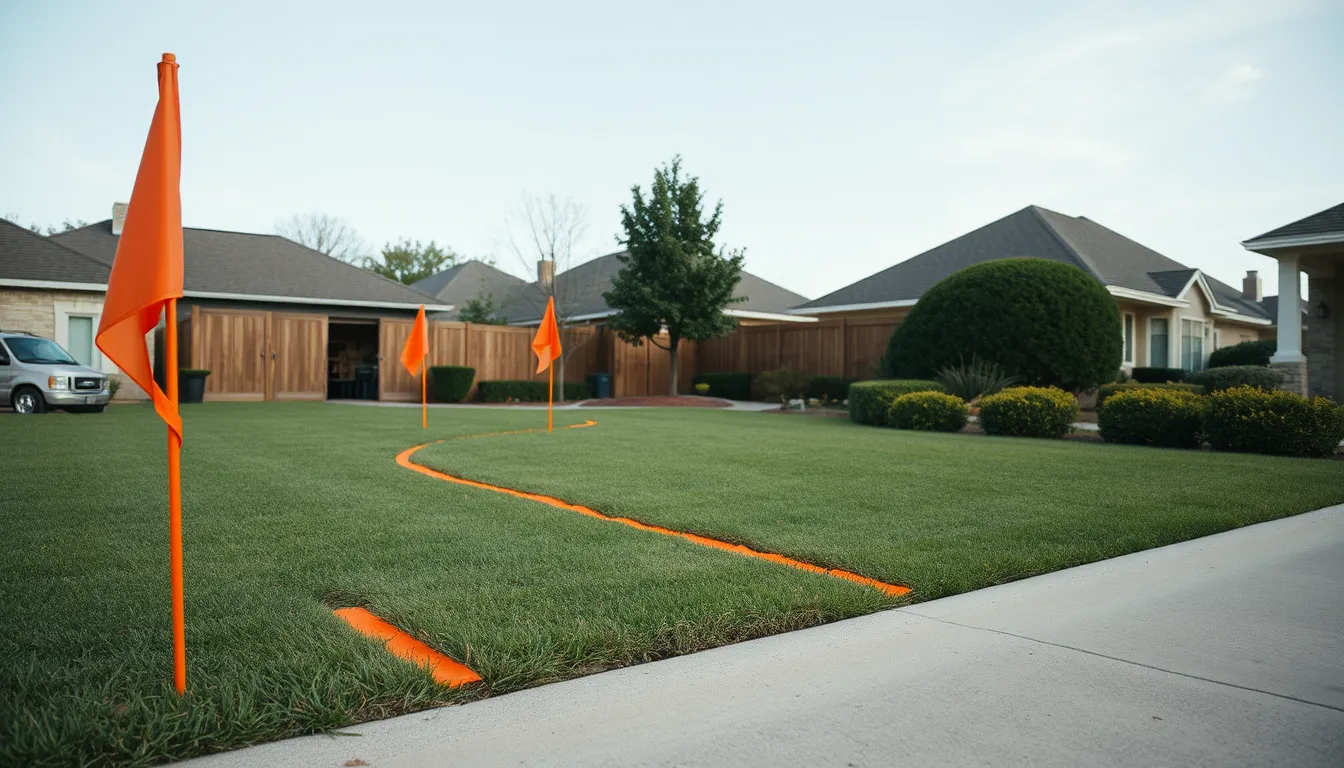
Traditional replacement opens a continuous trench along the lateral route. On a Preston Hollow lot with irrigation, hedges and mature canopy, that means cutting through root systems and rebuilding beds. Trenchless reduces the open ground to a launch pit and a reception pit. The trade is that trenchless leaves the old pipe in the ground, fractured outward, with the new pipe inside its path. That is normal and it is not a defect, but it does mean the old line cannot be reused later.
Cost and timeline side by side
Open cut and bursting land in a similar per-foot band once restoration is counted, with trenching often cheaper on bare ground and trenchless cheaper where a driveway crosses. Lining is frequently the lowest-cost option on a qualifying short reach. Timelines are close: most laterals are a one or two day job either way. The difference is that a trenchless job leaves the yard usable the same afternoon.
Questions on this topic
Can every sewer line be repaired trenchlessly?
No. Lining needs a round host pipe, and bursting needs enough clearance and sound enough surrounding ground to pull through. A camera run decides eligibility.
Does trenchless repair last as long as replacement?
A properly installed liner or burst line is a fifty-year-class repair. The failure mode to watch is installation quality, which is why the post-work recording matters.
Will trenchless fix a sagging sewer line?
No. Lining follows the existing shape, so a sag remains a sag. Only replacement or bursting resets grade.
Which method is quieter and faster on a residential street?
Trenchless generally, because there is less excavation and spoil removal. Both are typically completed within one or two working days.