Sewer Line Repair in Downtown Dallas, Dallas
Downtown is ringed by freeways and underlaid with mains older than most of its buildings.
- Camera footage and written scope before any price
- City of Dallas permits handled when the main is touched
Downtown Dallas sewer callback
Tell us what is backing up. We call back to confirm a window.
The freeway loop as a boundary
Downtown Dallas is the central business district, and the practical boundary is the freeway loop: I-345 on the east, I-35E to the west, I-30 across the south and the Woodall Rodgers Freeway on the north. It is the second-largest business district in Texas, and the density of connected buildings inside that loop is why a single main failure can affect several tenants at once.
Mains older than the buildings above them
Dallas ran its first sewers in the 1880s, initially for storm water, and discharged directly to the Trinity River before treatment. Parts of the downtown collection system were laid long before the current towers. A building from 1985 can sit on a service connection from a much earlier era, and the two do not always match in material or capacity.
Who owns what in a downtown building
The landlord owns the service line from the building to the public main. The tenant owns the fixtures and the interior branch lines. When a basement or loading dock backs up, a camera run establishes which segment failed and therefore who pays. Without that footage, the conversation becomes an argument about responsibility.
Permits, lanes and traffic control
Any work in the right-of-way downtown requires City of Dallas approval, and excavation near a travel lane may require traffic control. Dallas Water Utilities inspects main connections. Sidewalk and street restoration standards in the CBD are stricter than on residential streets, and that cost belongs in the quote from the start.
Scheduling around business hours
Restaurants, hotels and offices cannot lose drainage mid-service. That usually means camera and jetting work is scheduled outside trading hours, and any repair that requires shutting a line is staged so the building keeps one path to the main. The plan is set before anyone mobilises, not negotiated on the pavement.
Loading docks and the low point of a building
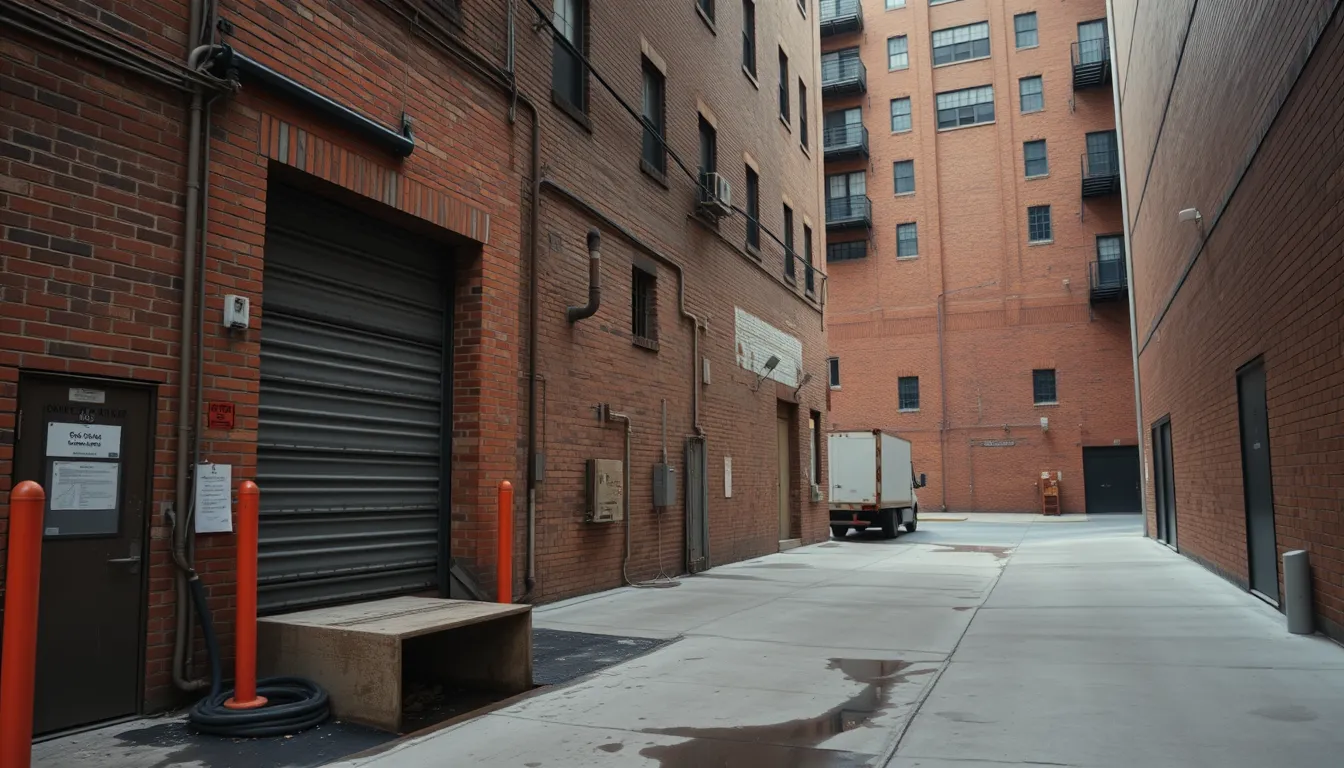
Backups downtown show up at the loading dock or the lowest floor drain, not in a bathroom. Those points sit below the public sewer in many buildings, so waste is lifted by a pump or drains by gravity through a long service line. When a dock floods, the first diagnostic is whether a lift pump failed or the service line is blocked.
Records a building should already hold
Useful buildings keep an as-built drawing of the service line and any later repairs. When that record is missing, the camera run becomes the as-built. Ask for existing drawings before a crew mobilises; on a downtown property they often shorten the job by hours.
Pressure testing before a building reopens
When a downtown service line is replaced, the work is not finished when the trench closes. The line should be tested and the fixtures run before tenants return, because a joint that leaks under a lobby is a second mobilisation at the worst possible hour. Build the test into the schedule as a separate step with its own window.
ZIP codes commonly associated with Downtown Dallas: 75201, 75202, 75207.
Downtown Dallas sewer questions
How old are the sewer mains under downtown Dallas?
The city’s first sewers date to the 1880s and originally carried storm water to the Trinity River. Portions of the collection system predate the buildings currently standing above them.
Who is responsible when a downtown basement backs up?
Responsibility splits at the property line and at the building connection. A camera run establishes which segment failed, which is what settles the question between landlord and tenant.
Can sewer work downtown happen at night?
Often it has to. Restaurants and hotels cannot lose drainage during service, so camera, jetting and tie-ins are scheduled outside trading hours.
Does a CBD repair cost more than a residential one?
Usually, because of traffic control, right-of-way restoration standards and access constraints. Those are separate line items and should appear in the quote, not arrive as a surprise.